


Project Successes In China
BUSS has demonstrated its expertise in the demanding production of HV-XLPE cable insulation materials (cross-linked polyethylene for high voltage): the company has successfully completed projects with Chinese customers from State Grid Corporation of China (the world’s largest energy supply company), Wanhua, Wanma, and Dewei.
Cutting-edge Technology For The Cable Industry
This application places extremely high demands on the quality, purity, and performance of the materials and the systems used. With its kneading technology, BUSS has extensive experience in processing temperature-sensitive materials. This takes place at moderate and uniform shearing speeds.

Thanks to these uniform and moderate shear rates, a temperature below 200 °C can be maintained over the entire length of the process without the temperature peaks that occur in other systems. This reduces the degradation of the materials, which impairs the electrical properties of the end product.
All these customers know that BUSS supplies the best possible compounding technology for their application. Added to this is the local, competent service that these customers trust BUSS for the long term and have been able to successfully complete these projects.
Learn More
Typical plant layout for XLPE insulation material
Links
Das könnte Sie auch interessieren…
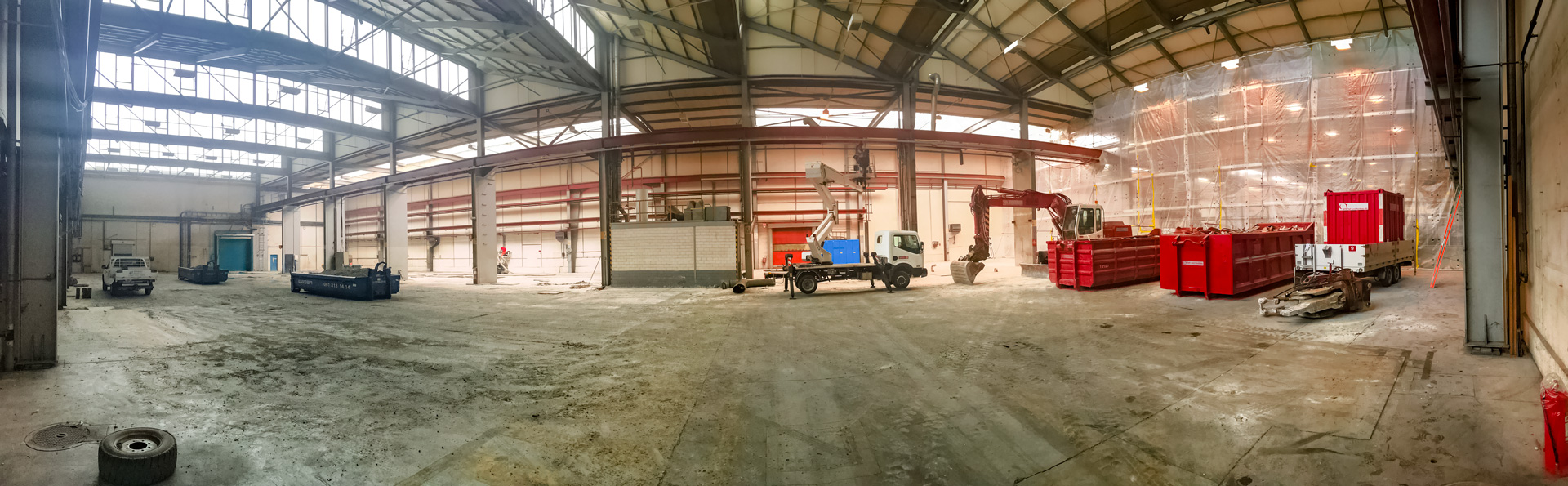
Start Refurbishment
At BUSS, we’re proud to announce the start of refurbishment works for our machine assembly hall!
COMPEO – compounding technology for the polymers industry
With COMPEO, the state-of-the-art compounding machine from BUSS, you lay the foundation for reinforced end products which are more scratch-resistant, more flame-retardant, and more weather-resistant — while saving resources.
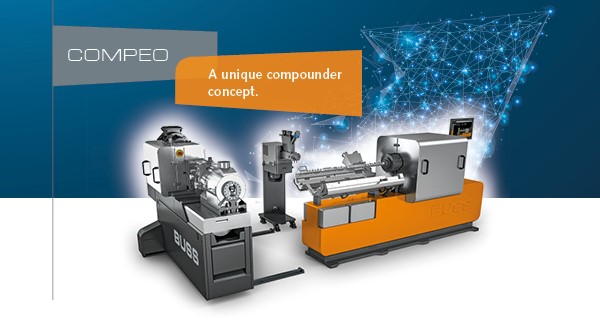
COMPEO – A unique compounder concept for the polymer industry
The state-of-the-art compounding technology of COMPEO meets the extremely high requirements of the polymer industry: a wide range of applications, a large operating window, high flexibility and robustness, as well as consistent process stability, but also operational and operator safety, energy efficiency and reduced operating costs.


