


Solution for high-quality 220kV power cables for China
The optimum material composition for high-voltage power cables is still a major issue. Together with P&M Cable Consulting we have developed an individual solution for a Chinese cable manufacturer.
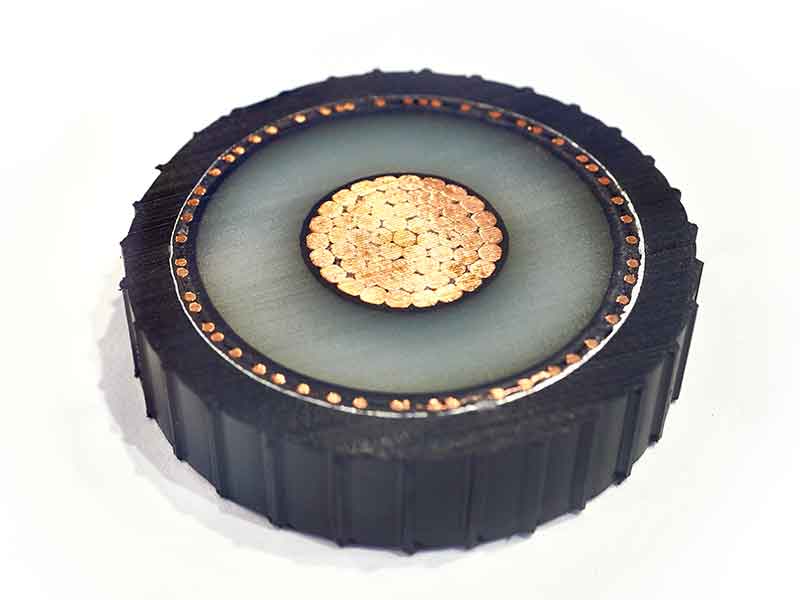

Denis Labbé, owner and consultant at P&M Cable Consulting LLC, summarizes the results of the joint project: “Based on the successful cooperation between P&M Cable Consulting (Geneva, CH) and BUSS AG (Pratteln, CH), a cable manufacturer in China is now able to produce high-quality 220kV power cables using the Partners’ joint know-how and technology package. The particularity of the required extra-smooth interior/exterior semiconductor and insulation compounds, which were produced locally on-site, lies in the combination of BUSS’ innovative compounding technology and an improved peroxide impregnation process with P&M’s superior compound formulations. The performance of the produced cables demonstrates once more the ability of P&M and BUSS as a team to provide customers with state-of-the-art cable compound technology and support them in meeting highest standards of the Wire and Cable industry.”
Thanks to the many years of compounder experience at BUSS, the know-how of the employees and the possibilities in our own test laboratory, the development of such individual solutions is possible.
Das könnte Sie auch interessieren…
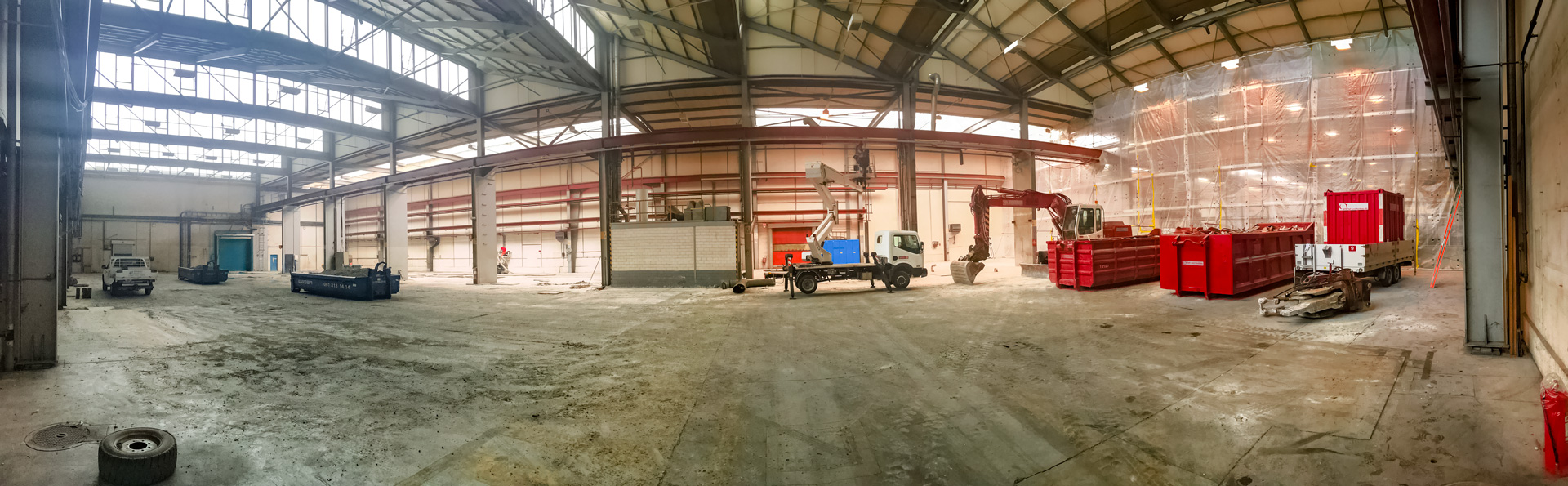
Start Refurbishment
At BUSS, we’re proud to announce the start of refurbishment works for our machine assembly hall!
COMPEO – compounding technology for the polymers industry
With COMPEO, the state-of-the-art compounding machine from BUSS, you lay the foundation for reinforced end products which are more scratch-resistant, more flame-retardant, and more weather-resistant — while saving resources.
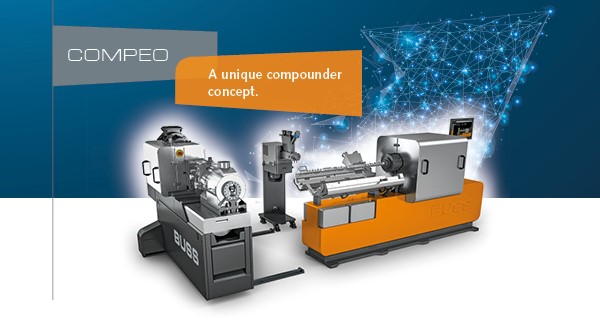
COMPEO – A unique compounder concept for the polymer industry
The state-of-the-art compounding technology of COMPEO meets the extremely high requirements of the polymer industry: a wide range of applications, a large operating window, high flexibility and robustness, as well as consistent process stability, but also operational and operator safety, energy efficiency and reduced operating costs.


